


chargement...
SUPERVILLE
2021 / LANNON, FRANCE
| maitrise d'oeuvre | Oro architecture paysage en co-direction avec Gautier Buresi |
SUPERVILLE
2021 / LANNON, FRANCE
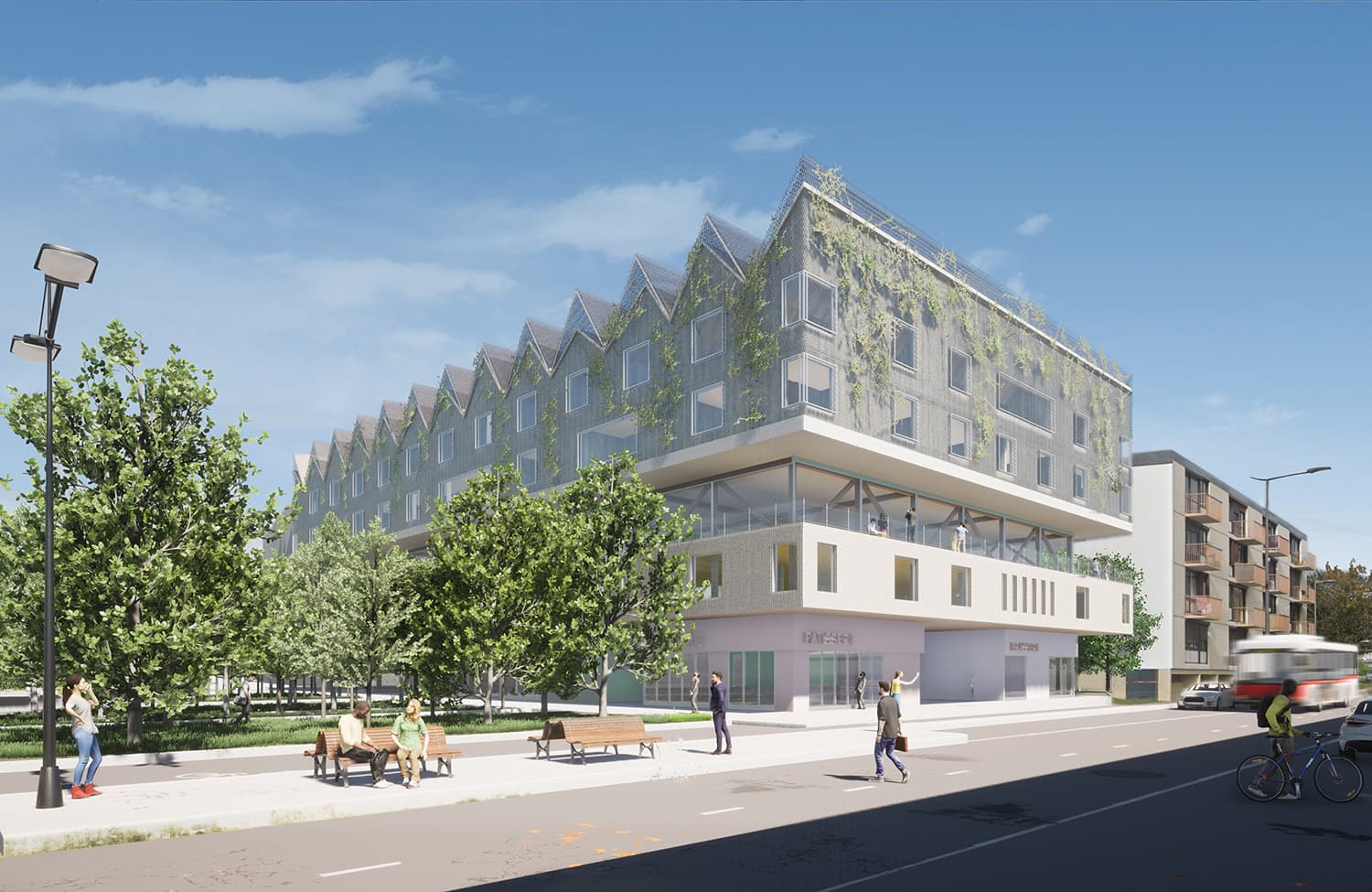
In response to the precariousness of isolating and divisive social situations, we propose a "foundation." A foundation for a world where the marginalized are brought back to the heart of urban reflection and city-making. The SUPERVILLE system is a residential housing project specifically designed for people with disabilities.
The project utilizes a network of decommissioned supermarkets to rehabilitate and revitalize neglected areas. By building upon existing structures, the project leverages strong urban fabrics located in city centers with excellent territorial connectivity. This case study serves as a replicable model across the national territory. The hyperstatic structure of supermarkets allows for intense densification. These sites occupy strategic geographical locations; they are deeply integrated into the territory and designed for universal accessibility, fostering a cohabitation between housing and commerce. While large-scale retail buildings are traditionally land-intensive, SUPERVILLE reclaims this space—particularly the parking lots—to restore biodiversity. Recognizing that people with disabilities are often isolated by their personal or professional circumstances, the project relies on the existing community and non-profit network to reintegrate them into society. Residents are given opportunities for vocational training (plant nurseries, catering) and participate in an inclusive process through these activities. A Layered Architectural Program: Ground Floor: Dedicated to commerce and production. This open space encourages strolling and public interaction. The productive garden is designed for universal access, featuring raised planting beds that guide movement through the site. First Level: Primarily focused on resident care. The post-and-beam structure of the former supermarket provides modular, adaptable spaces capable of handling periods of intense medical needs, such as a pandemic. Second Level: A space for all. Designed as a large exhibition hall, this open floor is where the community network thrives. It facilitates encounters between neighborhood residents, caregivers, and center residents. This floor is the heart of the building, acting as a social catalyst. Top Two Levels: Residential floors for both healthcare staff and residents. Organized around a large central patio, these floors are flooded with light and space. A suspended garden brings greenery into the living quarters, while wide walkways allow residents to circulate and inhabit common areas. Through thoughtful coatings, light orientation, and modularity, the housing units share a common design language adaptable to different disabilities. The project is simultaneously inward-looking for privacy and outward-looking to make the world more accessible. Its true wealth lies in these dedicated meeting spaces, fostering inclusivity and shared experience. It is a realization that a "minority" eventually encompasses everyone, and that this is precisely where the transformation of our territories takes place. Project Details: The SUPERVILLE project centers on a large garden replacing the former parking lot, featuring a community restaurant and a nursery managed in part by the residents. Award: 3rd Prize, CNSA Competition: "Collective Living Places and Autonomy." In collaboration with: Quentin Leberre